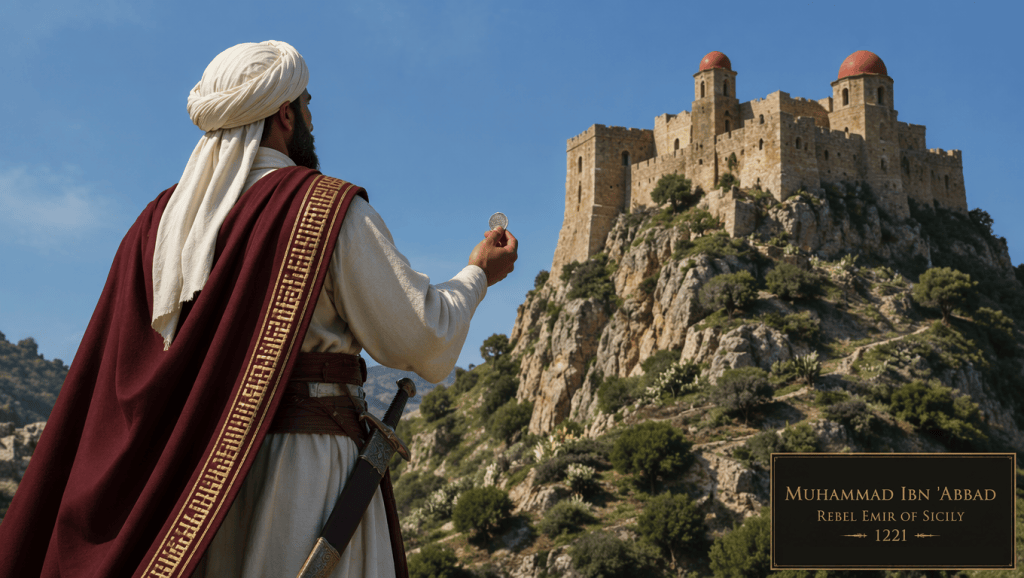
It is becoming increasingly common knowledge that Sicily, was once known as Siqilliya, a majority-Muslim, Arabic-speaking island during the middle ages. However, if you are trying to understand what happened to Sicily’s Muslim population, it is easy to feel there are pages missing from our history books. What’s more, dangerous misconceptions about this history continue to impact society today. To fill these missing pages, we will explore the story of a nearly-forgotten leader, Muhammad ibn ‘Abbad, who deserves a special place in the pantheon of Sicilian history and our popular imagination. In the rocky hills of western Sicily, Ibn Abbad led a heroic rebellion to defend Sicily’s Muslim population from annihilation. Following the demise of the Norman kingdom, his rebellion defiantly established an autonomous state that comprised a network of mountain castles and towns. The “rebel emir” established diplomatic relations with other Islamic states, governed the Muslim population, and even minted his own currency.
Who was Muhammad ibn ‘Abbad?
One reason for the lack of scholarship dedicated to the last major Muslim leader of Sicily is the absence of detailed accounts of Ibn Abbad’s life. The lionshare of research on this topic was done by the preeminent historian of Muslim Sicily, Michele Amari, in 1868. However, Armari faced a “total wall of silence” amongst Latin and Arabic sources and since then little progress has been made.1 There are also inconsistencies between sources, most of which only mention Ibn Abbad and the rebellion in passing. Further, these fragmented sources establish little more than basic biographical information. Therefore, we are forced to rely on inference, archaeological evidence, and occasionally on imagination to fill in what is missing from the historical record.
To make matters worse for Ibn Abbad, he is referred to by five different names across the eight principle Arabic and Latin sources we have to rely on. One source, the Annales Siculi, a 13th century Latin chronicle, refers to Ibn Abbad as “Benaveth.” It claims that he was a Sicilian noble, descended from the legendary emir of Syracuse who is recorded as having the same name. The original Benaveth led the resistance against the invading Normans in 1086. While the “dynastic resistance leader” makes for an interesting story, there is no evidence that Ibn Abbad was related to the original Benaveth and Amari believed the author was simply confused.2 The other three contemporary Latin chronicles use different albeit similar names. In the chronicle of Alberici monachi Trium fontium, “Mirabellum;”3 the chronicle of Richard of San Germano, “Mirabetto;”4 and the Cronache Siciliane, “Mirabeth.”5 Amari however, believed this name was simply a mispronunciation of the Arabic title “Morabit,” meaning “warrior priest.”6
The fullest narrative source containing details about Ibn Abbad’s life was written in by the Syrian historian Ibn Naẓīf al-Ḥamawī in the mid-1200s. In his At-Ta’rı̄kh al-Manṣūrı̄ (World History), Al-Hamawi writes that Ibn Abbad was not born in Sicily, rather, he was born in Ifriqiya in the city of Mahdiyya (modern day Tunisia) and immigrated to the island in his youth.7 Al-Hamawi’s assertion that Ibn Abbad was born in Ifriqiya is likely corroborated by the Tunisian historian Ibn Khaldun, who wrote that Ibn Abbad was descendant of the Banu Abs, a Bedouin tribe.8
Recognizing his “good conduct, his actions, bravery, and truthfulness,” Ibn Abbad won the support of a Sicilian ruler, Ibn Fakhir, and rose to a position of leadership in the community. He ultimately married Ibn Fakhir’s daughter.9 The Annales Siculi, records that Ibn Abbad had two sons who fought alongside him in battle. He is also recorded to have had a daughter whose legendary bravery matched that of her father’s.10
While Ibn Abbad is not mentioned by the sources that cover the rebellion prior to its peak in the 1220s, it is clear that he gradually rose to power and participated throughout the rebellion. Historian Alex Metcalfe, deduced that Ibn Abbad was “sufficiently old to be counted among at least the second generation of Muslim chiefs after the five reguli,” a group of “‘mini-kings” who led the community during the rule of King Tancred (1189 to 1194).11 Al-Hamawi refers to Ibn Abbad a Muslim “qadi” (judge) meaning Ibn Abbad would have had lengthy education in Islamic law and been called to oversee disputes and negotiate on behalf of the community.12 During the rebellion, Muslims organized themselves under the qadis and Ibn Abbad was ultimately chosen as the rebellion’s leader by his fellow rebels.13 With his supporters rallying behind him, Ibn Abbad seems to have consolidated territories ruled by multiple leaders ultimately emerging as “amîr al-muslimîn bi-Siqillîya” or “Commander of the Muslims of Sicily.”14
In addition to being well educated, we can also infer that Ibn Abbad was a cosmopolitan man, given that he contacted Muslim leaders abroad to seek support for the rebellion. He maintained diplomatic relations with the Almohad Caliph Yusuf “al-Mustansir” in Tunisia as well as others.15 He is even reported to have formed a military alliance with two infamous merchants, Guglielmo Porco of Genoa (who had been a fleet commander in Sicily) and Hugo Ferreus of Marseille, sometime after 1212.16
From the fragmented records, we can also infer that Ibn Abbad was well-respected and possessed incredible charisma given his ability to unite Sicily’s Muslims, lead an army, and establish an independent emirate within the Christian kingdom. Amari estimated that at the height of the rebellion the “sultan of the mountains” commanded between 25,000-30,000 soldiers.17 Therefore, it is indisputable that Ibn Abbad must have been a brave and capable military leader.
What Triggered the Rebellion?
For a rebellion that changed Sicilian history, there is remarkably little documentation of its events. The rebellion of Sicilian Muslims took place roughly between 1189-1225 with a second phase of resistance between 1243-1246. Following years of indignities and the loss of significant autonomy over their lands, the rebellion was the first time in over a century that Sicilian Muslims offered sustained resistance to their Christian rulers. While Latin chronicles describe a number of offensive raids, the rebellion was primarily focused on creating a “state within a state” that served as a refuge across the mountain fortresses and hamlets of western Sicily.18 The reconstitution of an island-wide emirate may have been a popular aspiration following the Norman conquest but by the 13th century, Muslims had been Norman subjects for generations. The rebellion therefore did not seek outright control of the kingdom. Instead, it should be understood as a rebellion for survival.
What initially triggered the rebellion was a royal succession crisis in the Norman kingdom when William II unexpectedly died in 1189 with no heir to the throne. With the absence of royal authority, Latin Christians began to massacre Muslims, across Palermo, even inside the royal palace. The “pogrom forced Muslims into open rebellion and triggered an exodus from cities.19 The Annales Casinenses, records briefly that, “trouble arose at Palermo between Christians and Saracens. After many of their men had been massacred, the Saracens fled and went to live in the mountains.”20 The chronicler Roger of Hoveden wrote that in 1190, “more than a hundred thousand” [Muslims] retired to the mountainous parts [of Sicily] with their wives, sons, daughters, and cattle, and there lived, attacking Christians and doing them considerable injury.”21 While this estimate is possibly exaggerated, it does give us a sense of the impact their exodus must have had.
This messy succession crisis in the Norman kingdom continued with the brief rule of Tanaced between 1189-1194. During this period, the Muslim community’s five “‘mini-kings” were said to have returned reluctantly to Palermo where Tancred was able to defuse the rebellion. However, this brief deescalation was cut short with Tancred’s death in 1194.22
When the German King and Holy Roman Emperor, Henry VI, conquered Sicily in 1194, he set out to dismantle the multicultural Norman kingdom. As Jeremy Johns notes, German knights replaced Muslims as royal ministers; Arabic was abandoned and Latin became the sole administrative language. When Henry died in 1197, another wave of anti-Muslim pogroms took place in Palermo. While his Norman wife, Constance of Sicily, attempted to reverse the anti-Muslim polices of her husband, she died the following year, leaving their infant son, Fredrick II as heir to the throne.23
An Independent Rebel Emirate:
From this period onward, the Muslim rebels managed to assert near-complete independence for over two decades. In 1206, Pope Innocent III wrote a letter addressed to the “qa’ids of Entella, Platani, Jato, and Celso and all qa’ids and Saracens settled throughout Sicily.”24 The Pope requested that they maintain their support of the church and the royal authority of Frederick, who at this time was still a child. The letter’s appeal for loyalty to the crown confirms the de facto independence that the Muslim rebels had already achieved.25 While Ibn Abbad was not named in the letter, it is plausible, given the timeline, that he was at least one of the recipients.
Like other guerrilla insurgencies, the rebels evened their odds by forcing the enemy to fight on unfriendly terrain that gave them a defensive advantage. Under Ibn Abbad’s leadership, the rebel army took control of an almost continuous chain of mountain fortresses and lookout posts between Monreale and Agrigento. Al-Hamawi mentions 11 fortresses and that Ibn Abbad’s relatives may have been in command of a number of them.26 In addition to those mentioned in the Pope’s letter, other fortresses we know of include Calatrasi, Guastanella, Calatamauro and possibly Calatabarbaro.27 There are also references to rebel strongholds in Ghalu (or Gallo) and Cinisi though their present-day locations are debated.28
As the rebellion spread, the rebels secured most of the 72 hamlets that King William II had bestowed on the abbey of Monreale in 1182.29 The transfer of these lands from royal ownership to ecclesiastical lordship had been an attempt to both Christianize and curtail the freedom of Muslims peasants (“villeins”). Since the mid-ninth century, this part of Sicily had been the densest zone of Arab and Berber settlement.30 While some wealthier Muslims may have fled to North Africa and Spain to escape violence, Muslim villeins still constituted the majority of the inhabitants in many parts of western Sicily. This is confirmed by Ibn Gubayr’s account of Sicily from 1185, where he states that the vast majority of the population from Alcamo to Trapani was still Muslim. Similarly, we are told “there were “countless saracens living in Agrigento”…and few Christians had settled until at least 1189.31 Therefore, it is not a leap to imagine that the rebels were greeted as liberators by the majority-Muslim populations, when they took these towns, given the rapidly declining status of Muslim’s in the kingdom.
The rebels also took key cities such as Corleone in 1208 and engaged in a number of raids on Palermo, which they attacked in 1216. The rebels raided right up to the walls of the Cathedral of Monreale and took the surrounding lands. In 1219, they captured the church-hospital complex of San Giovanni dei Lebbrosi, which had once been an Islamic castle at the gates of Palermo.32 In Agrigento, the rebels captured Orso, the local Bishop and held him prisoner for 14 months in the fortress of Guastanella, from which he was ransomed.33 There is even evidence that the rebellion extended beyond Western Sicily to the north-central estates of Cefalù.34
Though not well-documented, historians note that the rebels had links with North African emirs, who supplied them with arms, funds and even manpower. In order to maintain communications with these allies, the rebels took Agrigento and its Africa-facing port in 1219.35 This “unimpeded access” to their fellow Muslims is pointed to as a source of the rebel’s power.36 This assertion is possibly corroborated by Frederick’s later attack on the Tunisian island of Djerba, seemingly for the purpose of cutting the rebels off from a source of support.
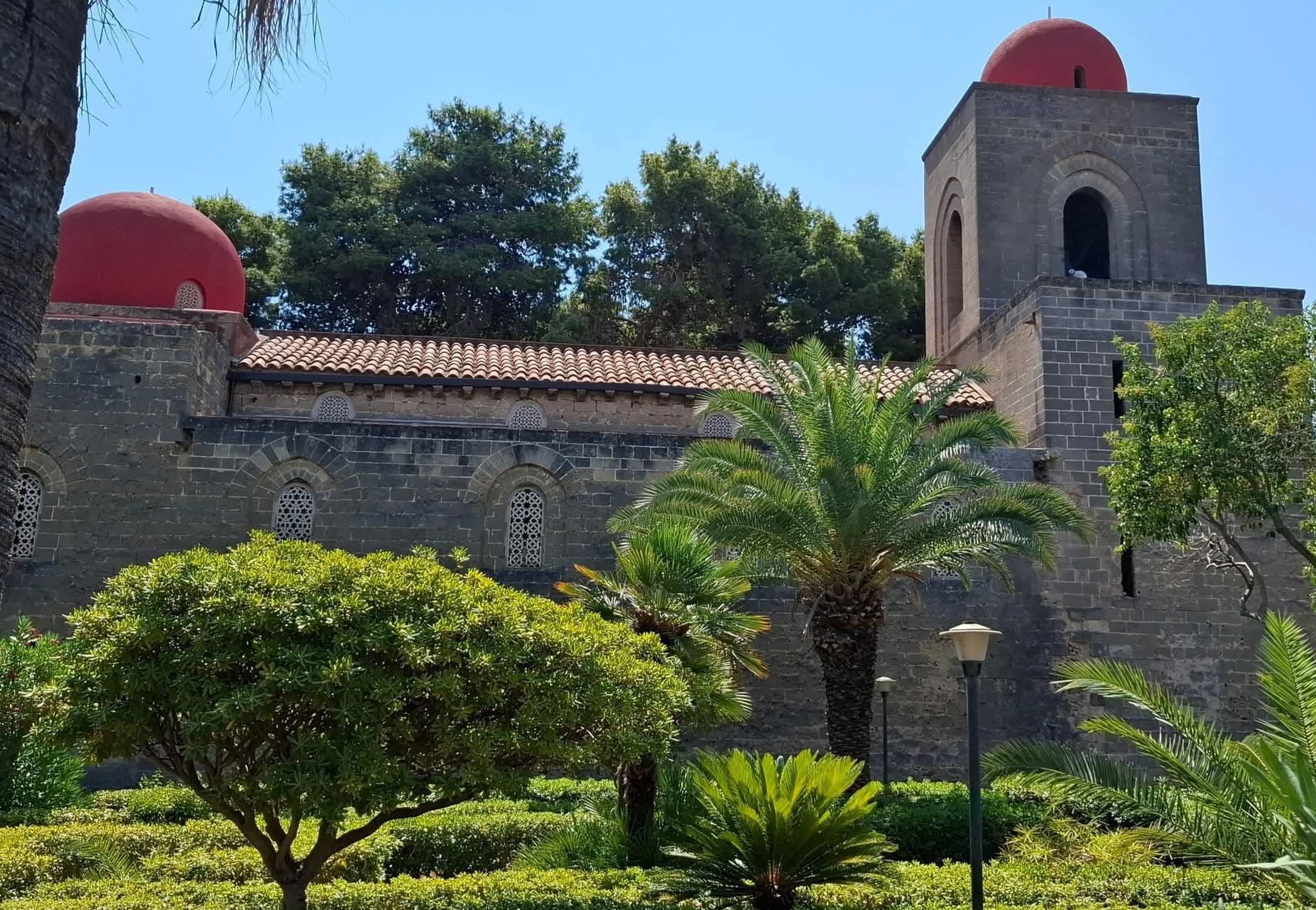
Given that we rely largely on church documents and chronicles written by Christian monks to attest to these events, historians often frame them as offensive “predatory” raids aimed at inflicting damage on the Church. Some even entertain the preposterous idea that the Sicilian Mafia’s highway banditry of the 1940s may have origins in or at least resembled the rebel’s tactics.37 It has not widely been acknowledged however that the locations targeted by the rebels correspond to estates where generations of Sicilian Muslims had lived with relative freedom and protection and had recently become “property” of the Church of Monreale and Agrigento. While the villeins continued to pay jizya (tax), now to the Church, they could no longer count on royal protection from the increasing number of hostile Christian settlers. Surviving royal registers with the names of villeins show that in the lands around Monreale that were raided by the rebels, 99.2% of the 729 villeins had Arabic names. In Corleone, 96.6% of the 1,141 villeins had Arabic names. In Corleone, 96.6% of the 1,141 villeins had Arabic names.38 San Giovanni dei Lebbrosi was similarly in possession of four separate estates and their villeins.39 The strategic significance of these targets therefore indicates the rebels’ motivations for the liberation of their fellow Muslims and not random acts of violent “banditry.”
The Coins of Ibn Abbad’s Rebellion:
The most visible symbols of Ibn Abbad’s rebellion are two coins minted by the rebel emir–one whose text often appears off-center and one more standardized coin. The first coin is the result of a defiant act that serves as a metaphor for Ibn Abbad’s emerate. The coin is a defaced royal denari, which the rebels melted down and re-struck with Ibn Abbad’s name to be the currency of their emirate. The Emperor was personally enraged by this act of treachery.40 Legally speaking, the private issuing of coinage was considered a capital offense under the Assizes of Ariano.41Archaeological excavations have uncovered this coin in multiple mountain sites across Western Sicily.42 Evidently, the currency was widely used by the rebels as today one can easily find these coins available for purchase.
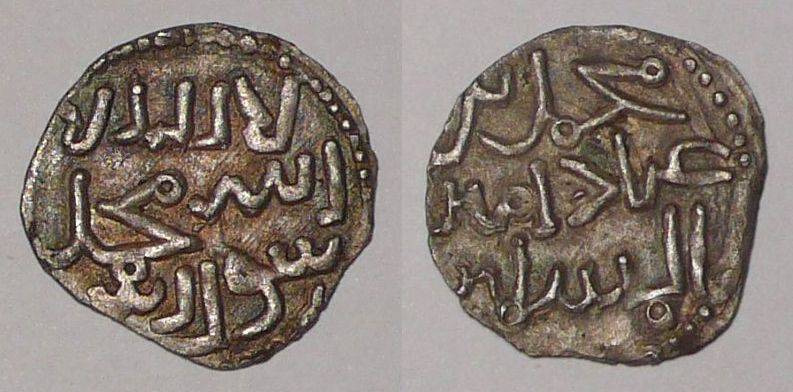
One side of Ibn Abbad’s defiant coin contains the Shahada or Islamic creed:
لا اله الا الله محمد رسول الله
There is no god but Allah and Muhammad is the messenger of Allah
The reverse side reads:
محمد بن عباد امير المسلمين
Muhammad ibn ‘Abbad, Commander of the Muslims43
While the second coin, which is more rare, does not seem to be stuck using Fredrick’s currency, it is worth noting that Fredrick’s coins were minted in Latin following a period of several hundreds of years of Arabic or bilingual Latin-Arabic coinage in Sicily. The re-introduction of Arabic was itself an act of defiance.
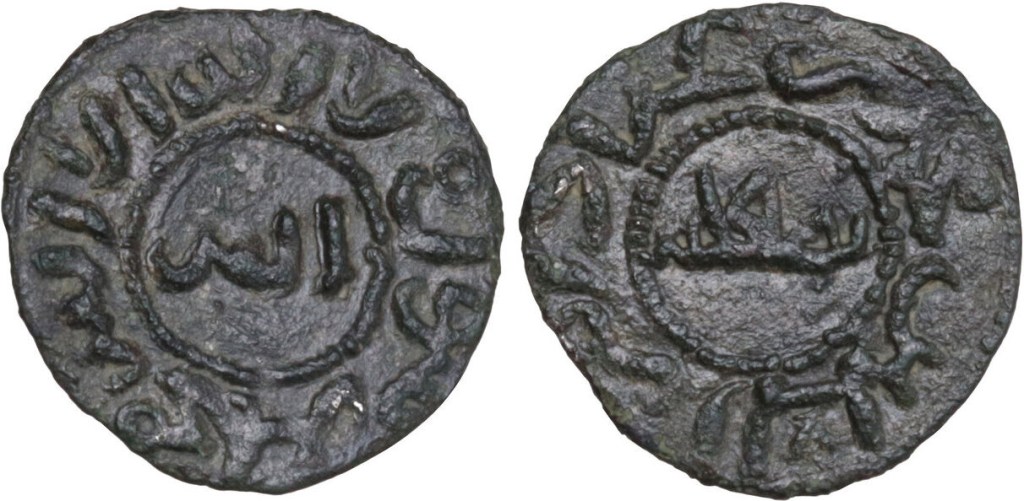
لا اله الا الله محمد رسول الله
There is no god but Allah and Muhammad is the messenger of…
And the word in the center reads “Allah.”
الله
محمد بن عباد امير المسلمين
Muhammad Ibn ‘Abbad, Commander of the Muslims of…
And the word in the center reads “of Sicily.“
بصقلية
A related artifact, a casting mold for a coin-like pendant, was excavated from the site of the Islamic fortress at Entella and has been dated to the same period as Ibn Abbad’s rebellion. Professor Maria Amalia De Luca from the University of Palermo believes these casts were likely made by the same blacksmith as Ibn Abbad’s rebel coin. The casting mold attests to the widespread use of religious pendants worn by Sicilian Muslims. Therefore, these pendants can be interpreted as another act of resistance given that Muslims of this period were subjugated by Sicily’s German kings and an increasingly hostile Church. A time when, as De Luca writes, Muslims likely “felt the need to proudly reaffirm their cultural identity-of which religious belief was, and is, an essential part.”
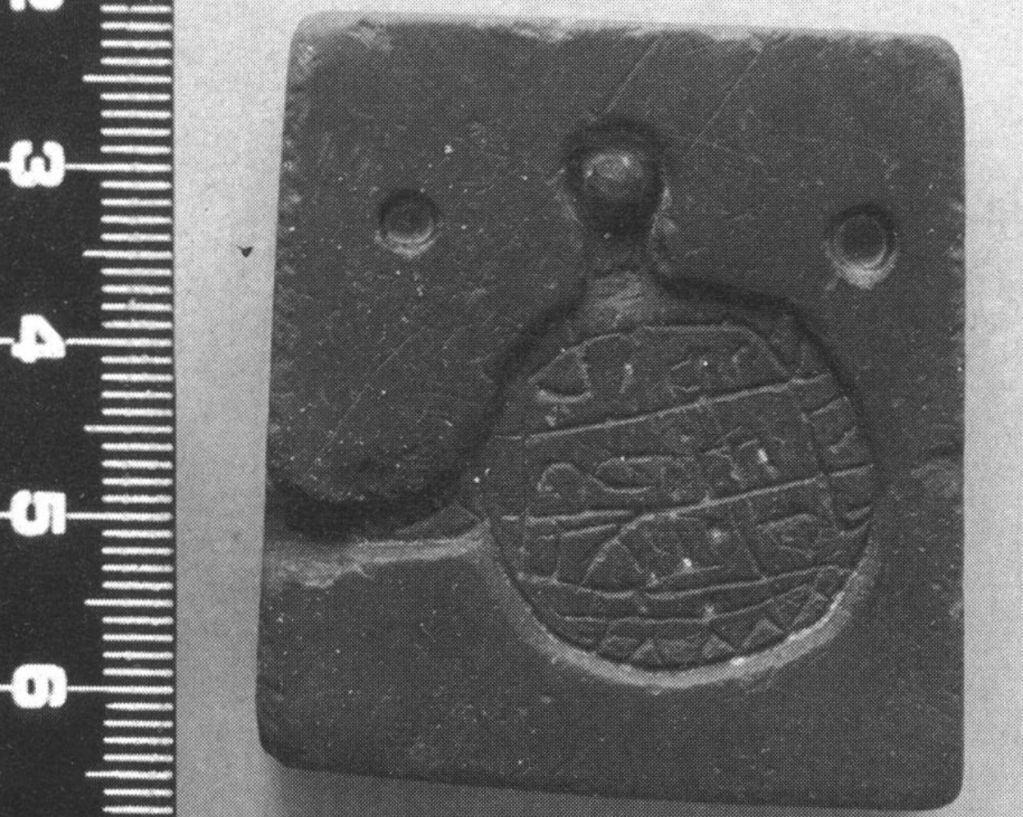
Following her analysis, De Luca asks us to utilize our imagination once more:
“Here, the historian’s and epigrapher’s task necessarily ends, but if we indulged in harmless daydreaming for a moment, we could imagine the Entella medallion around the neck of the tenacious 13th-century Muslim woman…who, from a remote mountain village, in the name of “her” land, “her” people, and “her” cultural diversity, launched a desperate challenge to the most powerful man in Christendom and to the cynicism of History.”44
The Emperor Strikes Back
During Fredrick’s youth, subsequent regents had allowed Sicily’s nobility to grab much of the Crown’s power and domain. Only after Fredrick, the half-German sovereign, had consolidated rule over the Hohenstaufen empire in Germany in 1215 and was enthroned as Holy Roman Emperor in 1220, was he in a position to reassert control over Sicily. Key to this goal was the destruction of the Muslim rebellion and the complete de-Islamification of Sicily. That some modern historians have argued Fredrick’s campaign was not motivated by religion but rather the elimination of a significant political challenge is a moot point.45 To achieve his goal, Fredrick would use a series of military campaigns, mass deportations, blockades of food, and forced population transfer with the goal of ridding the island of the “Saracen problem.”46
Prior to returning to Sicily, Frederick declared his “Law of Privileges” requiring all of the cities, castles, villages, churches and their villeins previously conceded to Monreale and other domains should be returned. Having lived free from persecution and servitude for over twenty years in the lands of the Val di Mazara, the Muslims could not submit without accepting poverty and serfdom. By the spring of 1221, Frederick arrived on the island with an imperial army to reassert and consolidate his authority, taking Trápani and Agrigento by the autumn. Then he turned his attention to the heart of the rebellion in the mountain strongholds.
Different sources place Ibn Abbad’s headquarters at different locations. Arabic sources record Entella, while Latin sources suggest Jato. In any case, it was against Jato that Frederick concentrated his military campaign against the rebel emir. In June of 1222, Frederick personally led an enormous army up to the walls of Jato. Al-Hamawi estimated that 60,000 foot soldiers and 2,000 horses accompanied the emperor. Although as Historian Julie Ann Taylor points out, this is likely an exaggeration.47 The strength of the resistance was such that the siege lasted two months. Al-Hamawi records a much longer siege of eight months however, culminating in the death of Ibn Abbad in 1223.
According to al-Hamawi, Frederick’s siege against Ibn Abbad was so fierce that months of fighting led a group of Muslim soldiers to break ranks. The men, who were charged with the defense of the castle walls, decided that a representative should go to Ibn Abbad to tell him that they did not wish to continue. Ibn Abbad was furious and demanded, “How is it you come to me with this type of address?” The messenger replied, “I am only speaking on behalf of everyone.” In disbelief, he called the men together to confirm what their spokesperson had said was true. The men claimed that the messenger had only shared part of their message but did not deny their desire to surrender. The emir ordered them to return to their posts.
Once they had gone, Al-Hamawi writes, the messenger “was killed.” When the news reached the men, they decided to take matters into their own hands. They set out for Frederick’s camp and upon reaching it, they offered the emperor entry into the Muslim castle.
Seeing the gravity of the situation, the son of the town’s qadi approached Ibn Abbad and urged the emir to surrender. Ibn Abbad replied “By God, I will not [surrender], because of the deep shame!” The internal fighting and months under siege must have taken their toll. Deep within himself, Ibn Abbad “was sickened by the fighting and the constant need to be alert, Al-Hamawi, wrote.” Under this pressure, and the reality that no Muslim leaders abroad were to intervene to save the Sicilians, Ibn Abbad broke.
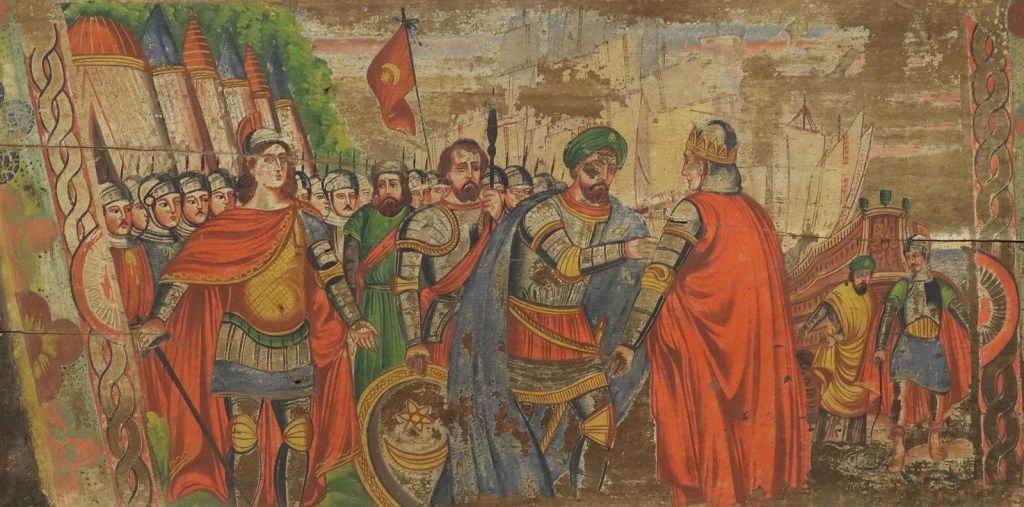
At first light, Ibn Abbad and the qadi set out for the emperor’s tent where he surrendered. We do not know what was said in the tent, only that Ibn Abbad was ambushed. The emperor, wearing his armor complete with spurs, beat and kicked the rebel leader cutting his side open. Then after seven days, he was executed and his sons were dragged to death behind horses.48 The Annales Siculi records that Ibn Abbad was hanged in Palermo and the chronicle of Alberic of Three Fountains states he was hanged together with his sons and two of his non-Muslim allies, William Porcus and Hugo Ferreus. 49
Despite the loss of their leader, Ibn Abbad’s followers continued to fight against Frederick. Al-Hamawi notes that a Commander Marzuq, who was an in-law of Ibn Abbad orchestrated a trap that led to the death of the emperor’s closest court official and 115 of his men. While rebel victories like these may have been limited, Frederick was forced to continue his campaign for three more years. We know from the emperor’s letters that Ibn Abbad’s soldiers in Jato continued to fight until at least August of 1224.50 The author’s family’s hometown, Sambuca di Sicilia, originally named Zabut is one of many towns that was inhabited by generations of Sicily-born Arab Muslims and is said to have resisted Fredrick’s army for two years before being conquered in 1225.51 Perhaps Zabut was one of the final holdouts as the chronicle of Alberic of Three Fountains records Fredrick’s “noble triumph over the Saracens” that same year.52
A ‘Heroine of the Resistance’
Ibn Abbad’s daughter, whose name has been lost to history, is also somewhat of a legend. She has been called “Sicily’s Muslim Joan of Arc” and there is even a 300-page work of fan faction, “Frederick II and the Maiden of Entella,” dedicated to her. The main source for the story of her brave leadership following her father’s death, comes from the north African historian Ibn ʻAbd al-Munʻim al-Ḥimyarī’s Kitāb al-Rawḍ al-miʿṭār fi khabar al-aqṭār (The Perfumed Garden of Information on Places).
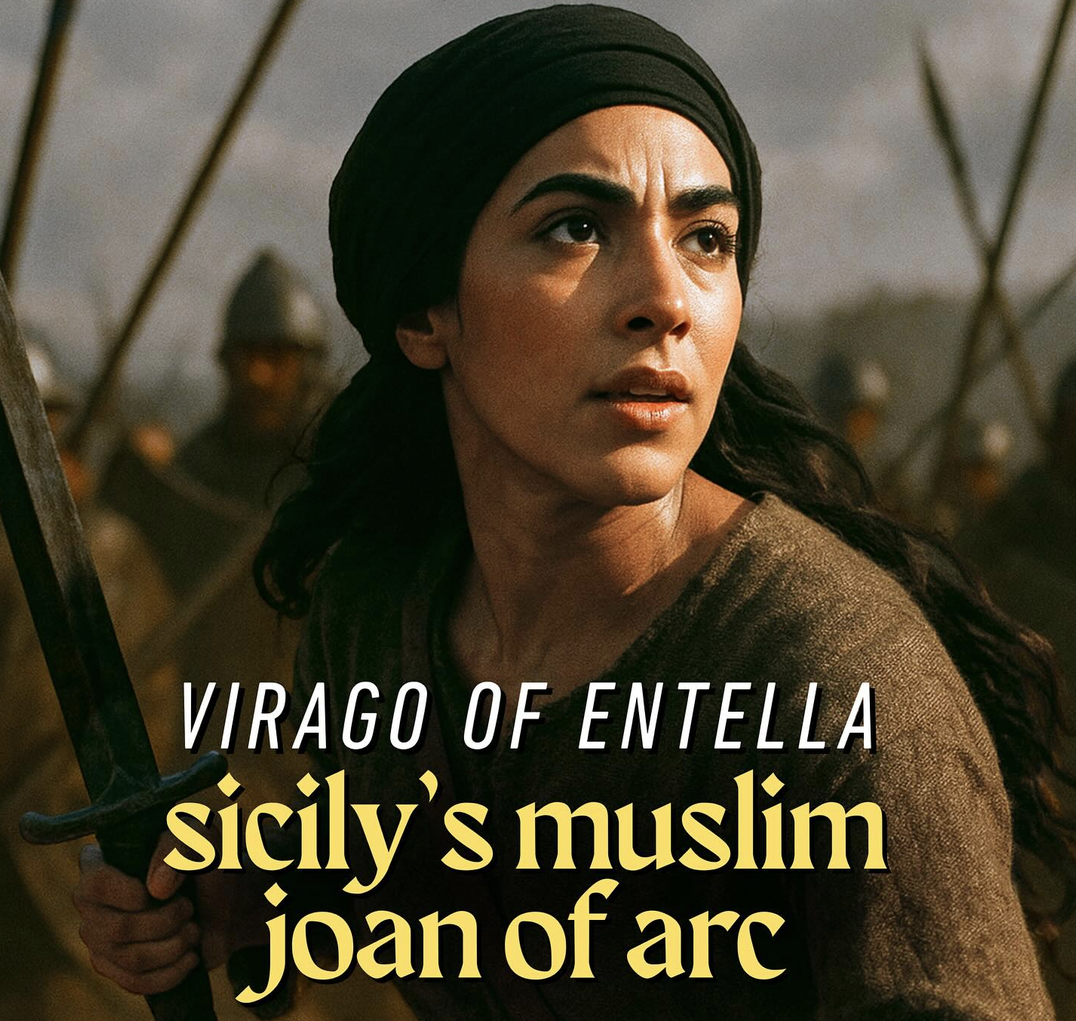
According to Al-Himyari, Frederick and his men betrayed and killed Ibn Abbad after he had negotiated a truce and safe passage for himself to Ifriqiya. Enraged by the Emperor’s act of treachery, Ibn Abbad’s daughter continued the rebellion from the stronghold of Entella. To avenge her father, she employed a ruse by offering her surrender. She wrote to Fredrick and invited him to send 300 of his best knights to take control of the rebel castle. She would open the gates at night allowing them to seize it by surprise. However, upon entering the castle, the Frankish knights were ambushed and killed. The next morning, Frederick expected to see his flags hanging flying but instead saw the heads of his knights swinging from the castle’s parapet.53
She wrote to the Emperor:
“One of my spies, whom I constantly send after you, informed me that you said: ‘ It’s astonishing that a woman could ensnare three hundred at once!’ But there’s nothing astonishing about it. …as long as my body retains a breath of life. …I shall deceive you until the day my supplies in this castle run out, and my partisans are rendered powerless. When I reach that extremity—what I shall do… you shall surely learn!”
Al-Himyari adds, “The Emperor lost all hope of prevailing and said: ‘I shall never be able to overcome her. [He decided] to build a castle to keep the Muslim fortress under surveillance, and to station infantrymen there—replacing one detachment with another whenever he had exhausted the previous one. So it went, until at last, reduced to her final extremity—true to the promise…the daughter of Ibn Abbad and took poison,” rather than surrender.
The key themes of Al-Himyari’s account of Ibn Abbad’s daughter–Frederick’s betrayal of her father, her counter-betrayal, and her ultimate suicide are perhaps cooberated by their inclusion in a second contemporary Arabic soure by Ibn Sa’id al-Maghribi, which was written in 1243.54
Deportations and Christianization
After the fall of Ibn Abbad at Jato and the surrender of the remaining rebels by 1225, Fredrick launched a large-scale deportation program of Sicilian Muslims to a colony in Lucera in the Apuglia region of southern Italy. In Lucera, the defeated and exiled Muslims became villeins in service of the crown and eventually were required to serve in the royal soldiers. Historians disagree on the total number of Sicilians who were deported to Lucera, as Ann Taylor points out. Estimates range widely from 15,000-40,000 from modern historians. Amari estimated that 50,000-60,000 Muslim men, women, and children were deported.55
While returning from Mecca in 1229-30, a Sicilian pilgrim named Al-Ramman is recorded to have briefed Sultan Malik al-Kamil of Egypt, on events in Sicily. He recounted that 170,000 people had been turned out of their homelands, stripped of their wealth and deported to Lucera.56 In addition, half that number had been killed, “the mountains were empty.” Al-Ramman pleaded with the Sultan to help the deportees be allowed to return to Sicily and if Fedrick refused, that they be given safe passage to Egypt. While Al-Ramman’s number may be inflated, it does give us a sense of the devastation the deportations had.
Not all Muslims were deported from Sicily. According to the Annales Siculi, some of the Muslims who initially capitulated to Fredrick in the mid-1220s were made to stay as serfs in the flatlands.57 There is also evidence from church registers that suggest that Muslim villeins also converted to Christianity. Tons examples exist of what was likely Arab Muslim absorption into Latin and Greek communities with “Christian” farmers with names such as Philippos, but whose fathers had been called “Mohammed” or “Ahmad.”58 The scholar, Louis Mendola lends credence to the assimilation theory, noting “…genetic evidence suggests that the greater part of Sicily’s Arabs did not simply leave the island…nor were they deported.” Rather, such evidence as exists implies that the great many assimilated with the Latin population, adopted Christianity and remained in Sicily.59 This was certainly the case in Sambuca di Sicilia, whose official hisory records that the town was rebuilt after the rebellion by the surviving Arabs who had “converted” to Christianity and Christians from a nearby town.60
While some historians downplay the cruelty of Fredrick’s deportations, the devastation experienced by those uprooted from their homeland is evident. A poem by Beni Seid ibn Zaffir, the son of one of the deported families of Jato, speaks to this emotional devastation: “On that fateful day of exile, every head was shaved in sorrow, and every beard was torn out in despair…Allah, Allah, why such desolation for your people?61 Amongst the Sicilians deported to Lucera, the pull of their homeland was so strong that, whenever the opportunity arose, they would secretly attempt to escape back to Sicily.62 In December of 1239, Frederick wrote an imperial mandate commanding the governor of Calabria to take action to completely prevent “saracens” from crossing the Strait of Messina to Sicily.63
The Aftermath and Decline of Western Sicily
The steady worsening of socio-economic conditions, continued deportations, confiscations of property, and state violence likely led to a final wave of resistance in 1243. The initial uprising spread and Muslims once again rose up and reoccupied the mountain strongholds of Jato and Entella. But after three years of engagements with the imperial army and a severe blockade on food, the last of the rebels surrendered. The mountain strongholds were ultimately destroyed and Fredrick ordered all remaining Muslims deported to Lucera.64 As Amari tells it, “from that time on, all records of Muslims in Sicily vanish; whence it is evident that if any remained, they embraced the religion of the victors and…merged into the new populace, within which distinctions of origin were already fading away.”65
While we have no way to know how many thousands of Muslims were slaughtered and deported during this period, wide areas of western Sicily were left empty. It has been estimated that half the village settlements which existed in the early Middle Ages ultimately disappeared. Of the 72 hamlets owned by the abbey of Monreale, only a dozen survive today, and nearly all those have different names, which suggest a later re-foundation. The evidence of Arabic tombstones and family names has been used to confirm that, by the late thirteenth century, deportations or absorption had entirely overwhelmed a people who had recently constituted the bulk of the population.”66
Frederick’s mass deportations were paired with a program of forced population transfer of Latin settlers from Lombardia and Celano to Christianize the population.67 What followed was a complete socio-economic collapse western Sicily. The rich diversity of crops, once cultivated through the use of Arab irrigation systems, were reduced to a monoculture of cereal crops. The situation became so desperate that Fredrick was forced to bring Arabic-speaking Jews from North Africa to cultivate specialized crops such as sugarcane, citrus, henna, indigo, and date palm groves, which had disappeared or declined following the loss of the Muslim population.68 A letter from the Church of Agrigento in 1254 complained of an economic crisis triggered by Fredrick’s deportation “their” Muslim villeins.69 The Jewish community ultimately became a new, albeit small source of tax revenue for the Church. They would live in Sicily for over two centuries speaking Judeo-Arabic, that is Arabic written in Hebrew letters, until their expulsion from Sicily in the wake of the Spanish inquisition in 1492.
Sicily ultimately became a peripheral region in Fredrick’s kingdom as with successive empires that ruled the island. Frederick moved the heart of his kingdom to the Italian mainland and ceased to visit Palermo. Having lost the artisans and their royal benefactors, the production of Islamic material culture of silk, ceramics, jewellery, and mosaics evaporated. With the loss of Arab craftsmen, nothing of architectural significance was constructed in Palermo in the 13th Century—certainly nothing to match the Cappella Palatina, La Zisa, or the Church of San Cataldo from the 12th century. Historian Dennis Mack Smith captured this downward spiral. “Palermo was left a dead city,” Smith writes. “So long as Sicily belonged to the world of North Africa and the Levant she had been rich; but when forcibly attached to western Europe she lost many economic advantages, and her geographic position instead of being a boon became a handicap.”70
A Legacy of Resistance
Frederick’s approach towards Sicily’s Muslims is often portrayed as “enlightened” or even sympathetic, suggesting he had an affinity for them. His decision to allow a large diaspora of Sicilian Muslims to live out their days with relative religious autonomy in Lucera is often cited to support this idea. His “reverence” for Islamic intellectual and material culture and his fluency in Arabic are indeed paradoxical given his crusade to eradicate the Muslim population from Sicily. However, viewed in a modern context, it is impossible to ignore that Fredrick’s efforts to ethnically cleanse Sicily of it’s Muslim population amount to a genocide.
Misconceptions and the over simplification of this history have had long-term consequences for Sicily, Europe, and beyond. Myths about Muslim “raiders,” “bandits,” and “pirates” as well as lack of understanding of Sicily’s long and dynamic relationship to the Islamic world continue to fuel dangerous and intolerant narratives. Hopefully, this article sheds new light on this topic. While Muhammad ibn ‘Abbad, the rebel emir, is a name that should be ubiquitous, to-date there is not even a Wikipedia page dedicated to him. His rebellion for survival is perhaps why traces of the island’s Muslim past remain a defining characteristic of Sicily’s heritage and culture. To that end, the legacy of Ibn Abbad and more importantly, the tens of thousands of Sicilians who rose up to resist their annihilation live on today.
Sources and Notes:
- Powell, James M. The Crusades, The Kingdom of Sicily, and the Mediterranean (Variorum Collected Studies Series). Ashgate Variorum, 2007. Internet Archive, XIV: 14. ↩︎
- Amari, Michele. Storia dei Musulmani di Sicilia. vol. 3, Part 2, Firenze, Le Monnier, 1872. Internet Archive, 597 ↩︎
- Albericus de Tribus Fontibus Albericus. Chronicon. Münchener Digitalisierungs Zentrums, 1241. Münchener Digitalisierungs Zentrums, 460 ↩︎
- Richardus de Sancto Germano. Ryccardi de Sancto Germano notarii chronica: in usum scholarum ex monumentis Germaniae historicis recudi. Hannoverae : Hahn. Münchener Digitalisierungs Zentrum Digitale Bibliothek, 50 ↩︎
- Di Giovanni, Vincenzo, editor. Cronache Siciliane dei secoli XIII. XIV. XV. BOLOGNA, Gaetano Romagnoli, 1865. Internet Archive, 266 ↩︎
- Amari, Michele. Storia dei Musulmani di Sicilia. vol. 3, Part 2, Firenze, Le Monnier, 1872. Internet Archive, 597 ↩︎
- Amari’s translation of Al-Hamawi mentions “youth” but it is not included in David Cook’s translation. Instead Cook mentions Ibn Abbad immigrated to Sicily “without exertion”(difficulty). ↩︎
- Ibn, 598 ↩︎
- Taylor, Julie Anne. Muslims in Medieval Italy: The Colony at Lucera. Bloomsbury Academic, 2003, 8 ↩︎
- Lévi-Provençal, Évariste. “Une héroïne de la résistance musulmane en Sicile au début du XIIIe siècle.” Oriente Moderno, vol. XXXIV, 1954, pp. 283-288. JSTOR. ↩︎
- Metcalfe, Alex. The Muslims of Medieval Italy. Edinburgh, Edinburgh University Press, 2009, 276 ↩︎
- Johns, Jeremy, and Nadia Jamil. The Way of the Qāḍī: The Banū Raǧāʾ Qāḍīs of Norman Sicily and their Successors. Preprint. 2023. Academia.edu, 19 ↩︎
- According to Ibn Khaldun and Ibn Sa’id al-Maghribi, Ibn Abbad was chosen by the rebels. Amari, Michele. Storia dei Musulmani di Sicilia. vol. 3, Part 2, Firenze, Le Monnier, 1872. Internet Archive, 597-8 ↩︎
- Birk, Joshua C. Norman Kings of Sicily and the Rise of the Anti-Islamic Critique: Baptized Sultans. Springer International Publishing, 2017. Academia.edu, 289 ↩︎
- Mendola, Louis, and Jacqueline Alio. Kingdom of Sicily 1130-1266: The Norman-Swabian Age and the Identity of a People. Trinacria Editions, 2021, 446 ↩︎
- It is unclear exactly when Ibn Abbad’s alliance with the merchants began but it is listed under 1212. Albericus de Tribus Fontibus Albericus. Chronicon. Münchener Digitalisierungs Zentrums, 1241. Münchener Digitalisierungs Zentrums, 460 ↩︎
- Amari, Michele. Storia dei Musulmani di Sicilia. vol. 3, Part 2, Firenze, Le Monnier, 1872. Internet Archive, 597 ↩︎
- Metcalfe, Alex. The Muslims of Medieval Italy. Edinburgh, Edinburgh University Press, 2009, 211 ↩︎
- Johns, Jeremy. “Cultural Engineering in Norman Sicily” Apollo Magazine, 18 June 2016. ↩︎
- Loud, G.A., translator. The Annals of Montecassino, 1189-1195. Translation. White Rose Research Online, Universities of Leeds, Sheffield and York, 1 ↩︎
- Smit, Timothy. “The Increase of Good Customs: Muslim Resistance and Material Concerns in Post-Norman Sicily.” Edited by Emily Sohmer Tai. Mapping Pre-Modern Sicily: Maritime Violence, Cultural Exchange, and Imagination in the Mediterranean, 800-1700, Springer International Publishing, 2022, pp. 111-127. Academia.edu,. 117 ↩︎
- Metcalfe, Alex. The Muslims of Medieval Italy. Edinburgh, Edinburgh University Press, 2009, 242 ↩︎
- Johns, Jeremy. “Cultural Engineering in Norman Sicily” Apollo Magazine, 18 June 2016. ↩︎
- Smit, Timothy. “The Increase of Good Customs: Muslim Resistance and Material Concerns in Post-Norman Sicily.” Edited by Emily Sohmer Tai. Mapping Pre-Modern Sicily: Maritime Violence, Cultural Exchange, and Imagination in the Mediterranean, 800-1700, Springer International Publishing, 2022, pp. 111-127. Academia.edu,. 116 ↩︎
- Metcalfe, Alex. The Muslims of Medieval Italy. Edinburgh, Edinburgh University Press, 2009, 276 ↩︎
- Ḥamawī, Muḥammad ibn ʻAlī. Ibn Naẓīf’s World-history: Al-Tā’rīkh Al-Manṣūrī. Edited by David Cook, translated by David Cook, Routledge, 2021., 188 ↩︎
- While no sources mention Calatabarbaro as part of the rebellion, Dr. Alessandra Molinari argues that when analyzing all relevant factors, Calatabarbaro aligns with everything we know about other sites from the rebellion. See Alessandra Molinari’s Segesta II. Il Castello e la moschea (scavi 1989-1995), 1997, 36 ↩︎
- It is unclear where Ghalu existed. Cinisi still exists but the original town/ fortress was destroyed. See article from Gianfranco Purpura in Sicilia Archeologica,1985, 85 for analysis. ↩︎
- Metcalfe, Alex. The Muslims of Medieval Italy. Edinburgh, Edinburgh University Press, 2009, 279 ↩︎
- Conquest and Conversion in Medieval Muslim Sicily. A talk by Alex Metcalfe, Senior Lecturer, Department of History, Lancaster University, UK. 28 September 2017. Vimeo, The Center for Middle Eastern Studies (CMES), Harvard University. Video. ↩︎
- Collura, P., Le più antiche carte dell’archivio capitolare di Agrigento (1092-1282), (Documenti per servire all storia di Sicilia, Ser. I. XXV), Palermo, 1960., 307: Bishop Gerlandus ‘built his cathedral and court building, which he completed within six years, next to the citadel for fear of the countless Saracens living in Agrigento, for there were few Christians there before the death of King William. ↩︎
- Amari, Michele. Storia dei Musulmani di Sicilia. vol. 3, Part 2, Firenze, Le Monnier, 1872. Internet Archive, 593 ↩︎
- Ibid. ↩︎
- Metcalfe, Alex. The Muslims of Medieval Italy. Edinburgh, Edinburgh University Press, 2009, 287 ↩︎
- Abulafia, David. Frederick II: A Medieval Emperor. Suffolk, Allen Lane The Penguin Press, 1988. Internet Archive, 145 ↩︎
- Van Cleve, Thomas Curtis. The Emperor of Frederick II if Hohenstaufen: Immutator Mundi. Oxford, Oxford University Press, 1972. Internet Archive, 136 ↩︎
- David Abulafia draws a connection to the Mafia and Amari makes use of the unfortunate comment about “predatory” nature. ↩︎
- Metcalfe, Alex. Muslims and Christians in Norman Sicily: Arabic Speakers and the End of Islam. New York, RoutledgeCurzon, 2003, 91 ↩︎
- Mandalà, Giuseppe, and María de los Ángeles Utrero Agudo. “The King’s Hospital in Norman Palermo: San Giovanni dei Lebbrosi in Context.” Suburbia and Rural Landscapes in Medieval Sicily, Archaeopress, 2023, pp. 12-29. JSTOR, ↩︎
- Almond, Ian. Two Faiths One Banner: When Muslims Marched With Christians Across Europe’s Battlegrounds. Harvard University Press, 2008, 59 ↩︎
- Ibid. ↩︎
- De Luca, M.A. (2005). Due Medaglie della Sicilia Musulmana. In Atti del Simposio Simone Assemani sulla monetazione islamica (pp.93-108). PADOVA : Simposio S. Assemani sulla monetazione islamica, 96 ↩︎
- See Molinari, 1997, 208 for an interesting note on Ibn Abbad’s use of the Arabic term al-muslimin rather than the more customary al-Mu’minin. ↩︎
- Ibid, 107 ↩︎
- This point is argued by Gabrieli Francesco, James Powell, and others. ↩︎
- Almond, Ian. Two Faiths One Banner: When Muslims Marched With Christians Across Europe’s Battlegrounds. Harvard University Press, 2008, 59 ↩︎
- Taylor, Julie Anne. Muslims in Medieval Italy: The Colony at Lucera. Bloomsbury Academic, 2003, 8 ↩︎
- Ḥamawī, Muḥammad ibn ʻAlī. Ibn Naẓīf’s World-history: Al-Tā’rīkh Al-Manṣūrī. Edited by David Cook, translated by David Cook, Routledge, 2021, 147. ↩︎
- Annales Siculi. Monumenta Germaniae Historica, Monumenta Germaniae Historica, pp. 494-500, 496. ↩︎
- Winkelmann, Eduard, editor. Acta Imperii Inedita Seculi XIII. Innsbruck, Innsbruck : Wagner’schen Universitäts-Buchhandlung, 1880. Internet Archive, 242. ↩︎
- Comune di Sambuca di Sicilia. “ Vivere il Comune – Zabut – 830 d.C..” Comune di Sambuca di Sicilia, Media Post, 21 March 2025. ↩︎
- Albericus de Tribus Fontibus Albericus. Chronicon. Münchener Digitalisierungs Zentrums, 1241. Münchener Digitalisierungs Zentrums, 530 ↩︎
- Lévi-Provençal, Évariste. “Une héroïne de la résistance musulmane en Sicile au début du XIIIe siècle.” Oriente Moderno, vol. XXXIV, 1954, pp. 283-288. JSTOR., 288 ↩︎
- Moritz, Bernhard. “Ibn Sa’ids Beschreibung von Sicilien.” Centenario della nascita di Michele Amari, vol. I, Palermo, Stabilimento tipografico Virzi, 1910, p. 294. Internet Archive. ↩︎
- Amari, Michele. Storia dei Musulmani di Sicilia. vol. 3, Part 2, Firenze, Le Monnier, 1872. Internet Archive, 596 ↩︎
- David Cook’s translation of Al-Hamawi’s work suggests that this number may have been a reference to money rather than people, however the description of devastation of an entire population still stands. ↩︎
- Annales Siculi.” Monumenta Germaniae Historica, Monumenta Germaniae Historica, pp. 494-500, 496. ↩︎
- Almond, Ian. Two Faiths One Banner: When Muslims Marched With Christians Across Europe’s Battlegrounds. Harvard University Press, 2008, 54 ↩︎
- Mendola, Louis. What became of medieval Sicily’s Arabs? Genetic Demographic Evidence. 2016. Academia.edu, 2 ↩︎
- Ragonesi, Alessandra and Graditi, Roberto. Archivio storico del comune di Sambuca di Sicilia. Palermo, Soprintendenza Archivistica della Sicilia Archivio di Stato di Palermo, 1997. Archivio di Stato di Palermo, 3. ↩︎
- Ibn Zafflr’s poem was unknown to Amari and from what I can tell, it has not been translated into English since its alleged republishing in 1874. Since Bennici does not provide the original Arabic, more research should be done to authenticate this source. Bennici, Giuseppe. L’ultimo Dei Trovatori Arabi In Sicilia: Versione Da Antico Manoscritto. Palermo, 1874. Internet Archive, 167 ↩︎
- Amari, Michele. Storia dei Musulmani di Sicilia. vol. 3, Part 2, Firenze, Le Monnier, 1872. Internet Archive, 611 ↩︎
- Fredrick II. Historia Diplomatica Friderica Secundi. Edited by Jean-Louis-Alphonse Huillard-Bréholles, Parisiis, 1852. Internet Archive. 590. ↩︎
- Taylor, Julie Anne. Muslims in Medieval Italy: The Colony at Lucera. Bloomsbury Academic, 2003, 18 ↩︎
- Amari, Michele. Storia dei Musulmani di Sicilia. vol. 3, Part 2, Firenze, Le Monnier, 1872. Internet Archive, 620 ↩︎
- Smith, Denis Mack. A History of Sicily: Medieval Sicily 800-1713. London, Chatto & Windus, 1968. Internet Archive, 59 ↩︎
- Abulafia, David. “Ethnic Variety and Its Implications: Frederick II’s Relations with Jews and Muslims.” Studies in the History of Art, vol. 44, 1994, pp. 213–24. JSTOR, 216 ↩︎
- Abulafia, David, (2007), The Last Muslims in Italy, Dante Studies, with the Annual Report of the Dante Society, No. 125, Dante and Islam (2007), pp. 271-287;
↩︎ - Rocco, Pirri. Sicilia Sacra Disquisitionibus. vol. 1, Panormi : Apud hæredes Petri Coppulæ, 1733. Münchener Digitalisierungs Zentrums, 704 ↩︎
- Ibid, 64. ↩︎

